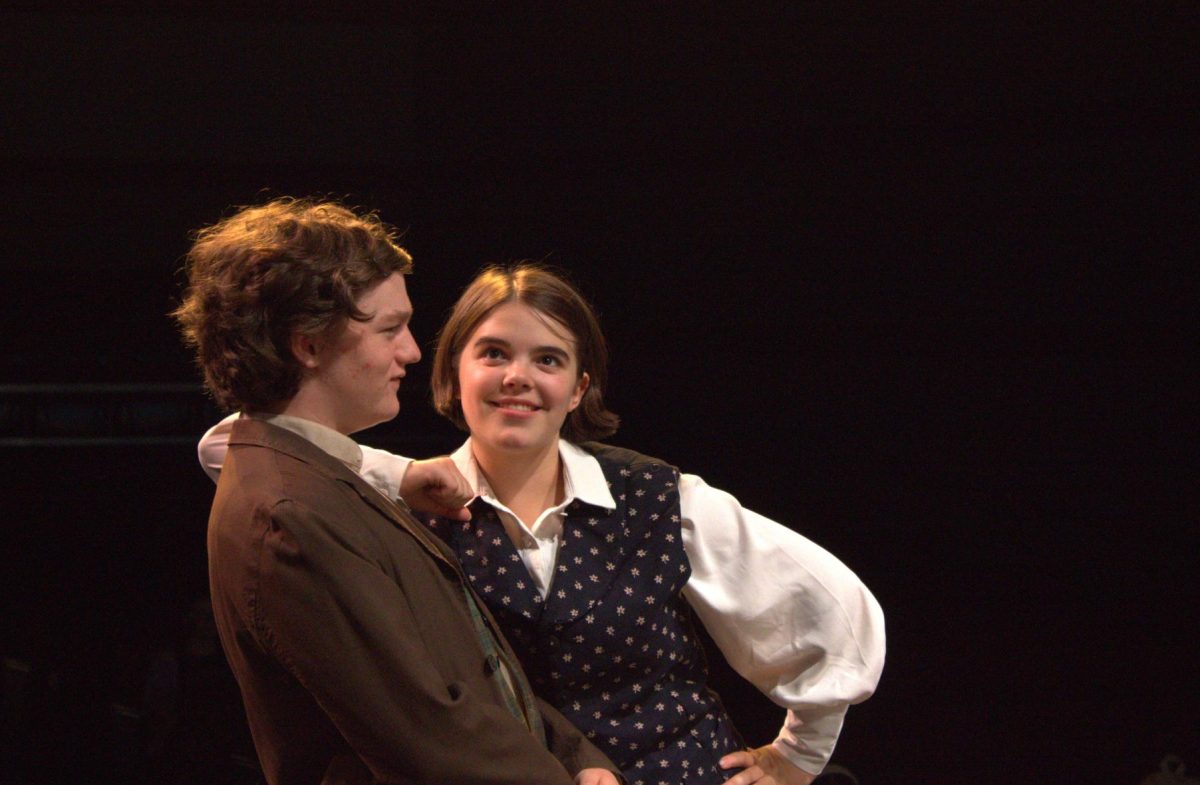

“Every note they play reflects their dedication and growth,” said Upper School orchestra director Joli Wu, reflecting on the Middle and Upper School fall orchestra concert. “Seeing their pride and excitement on stage is special and I want the audience to feel that too.”
The concert, which took place Sept. 30, 2025, featured a combination of classical elegance with pieces from W.A. Mozart and J.S. Bach and contemporary sounds from modern composers Kirt Mosier and Norman Leyden. The Upper School Philharmonia Orchestra performed Serenade for String Orchestra by Norman Leyden while the Chamber Orchestra performed Bach’s Brandenburg Concerto No. 3 in G Major. The two orchestras joined forces to showcase their combined talent with Red Rhythmico by Kirt Mosier.
“I built the program around the idea of growth and variety. I selected pieces that would excite them, showcase their growth and push them just enough outside their comfort zones,” Wu said. ”I also tried to include a mix of styles so everyone could connect with something personally while still building important ensemble and listening skills.”
Wu emphasized the ensemble’s improvement this year, which was clearly demonstrated in the concert as individuals developed stronger technical skills, musical independence and confidence that benefited the group as a whole. “I was most proud of how the students rose to the occasion and performed with so much confidence and unity,” said Wu. “You could really see and hear how much they’ve grown—not just technically but in the way they connected with each other and with the audience.”
Orchestra students shared similar reflections. Violinist and sophomore Jaina Alexander said, “I think we’ve grown a lot in how we work together and communicate as a group. Our playing is more in tune, coordinated and balanced, and we’ve become better at listening to each other to stay synchronized.”
While the performance may have appeared seamless, it resulted from weeks of preparation, challenges and dedication. One major obstacle was preparing Brandenburg Concerto No. 3. Both Alexander and Wu admitted its difficulty, with Alexander describing it as “the most challenging piece” and Wu recalling that it “required a great deal of individual accountability, listening and rhythmic precision.” Nevertheless, orchestra students overcame that challenge by “breaking the piece into small sections, practicing slowly with a metronome and focusing on fingerings and bowing to build accuracy and confidence,” according to Alexander.
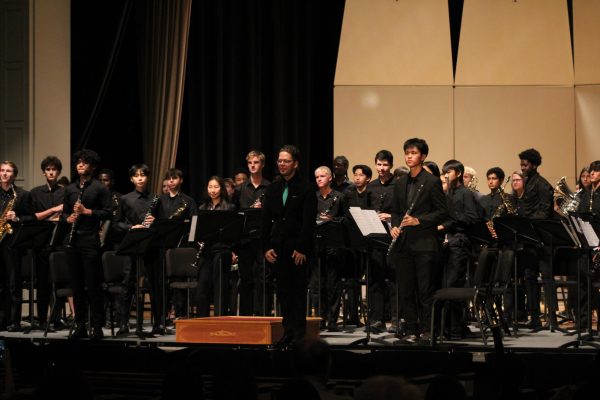
Just as the orchestra overcame its challenges and celebrated growth, the Upper School band ensembles showcased their progress and dedication in the Middle and Upper School fall band concert. The concert took place Oct. 7, 2025, and featured a diverse range of music performed by the Upper School, including English Folk Song Suite by Ralph Vaughan Williams, Ancient Footprints by Clarence Barber and Balatro by Minoo Dixon. The theme of the concert was “building bridges,” reflected in the collaboration between the Symphonic Band, composed of freshmen, and the Wind Ensemble, which includes sophomores, juniors and seniors. The two ensembles came together to perform several pieces, including Ancient Footprints and English Folk Song Suite, highlighting unity and teamwork across the Upper School.
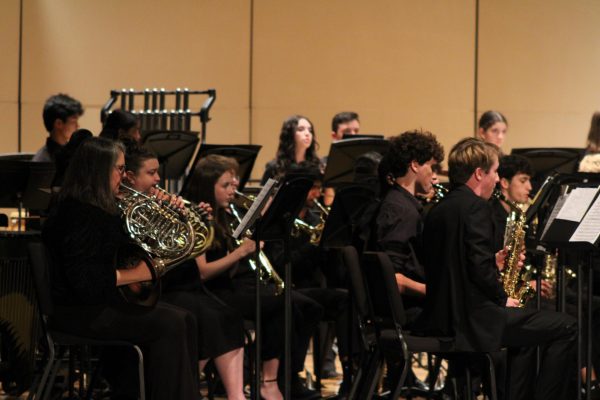
“My favorite piece was Ancient Footprints because I really enjoyed playing the slow section, as the overall phrasing of the section was delightful and the piece resonated the most with me,” said French horn player and sophomore Leonard Song.
He also reflected on how all the pieces improved his technique, articulation, note quality and phrasing with help from Upper School band director William Pitts. Song described the dedication of band students as “an unwavering commitment both personally and collectively through diligent rehearsals that strengthened our unity and showcased our passion for music.”
Together, the fall orchestra and band concerts highlighted not only the students’ technical skills and musical achievements but also the power of collaboration and community within the Upper School. These concerts served as a celebration of their hard work, a testament to the instruction of their directors and a reminder of the connection that music creates between performers and audiences alike.
Edited by Emma Stamps