
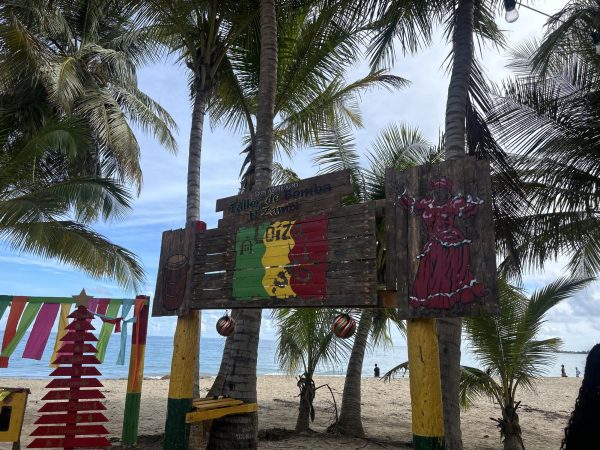
JanTerm is usually a highlight for every Westminster student. Whether traveling internationally, or going across Atlanta trying new restaurants, January is never a dull moment for faculty and students. This year, my JanTerm was Roots, Legacies, and Traditions. This JanTerm focuses on the African and Afro-Caribbean legacies and traditions, both before and after the African diaspora. To further increase our knowledge in the course, we traveled to Puerto Rico, where we got footage for our final project. I would say traveling to Puerto Rico was the highlight of the trip, not because it was a week away from home but because of the environment. It was the people that we had the privilege to interact with and the places we were able to tour that truly made a difference in this JanTerm. We learned about a variety of topics regarding Afro-Caribbean culture. Specifically, we studied dance, music, fashion, architecture, community and history. Activities like learning how to dance Bomba on the beach and touring Old San Juan and Loiza allowed us to truly immerse ourselves in Puerto Rican culture, therefore allowing us to learn more about Afro-Caribbean lifestyles. Through this trip, we discovered the importance of things that we, as Americans, may often overlook such as the significance of the drums. Drums have been around for centuries, highly used in several Afro-Caribbean dances and music, such as bomba, merengue, bachata, salsa and others. We were also able to try new foods such as mofongo. The food, dance and music were all helpful for our final project. But to learn about roots, legacies and traditions, you must dive deeper than the surface level, which means talking about both the good and the ugly.
Our class was able to see how Puerto Rico had a dark history of slavery. The Spanish began colonization in the 1500s, initially using Indigenous Taino people for labor. After, the Spanish switched to African labor. Drums usage was banned, and many Africans began adopting aspects of European culture in their fashion and music. However, we were also able to see how communities formed and maintained their own heritage, despite the colonizer’s attempt to erase it. Reflecting over our time after leaving helped myself (and hopefully others) notice the harm of colonization and the strength of the people that resisted this attempt to eradicate Afro-Caribbean culture.