
On Oct. 1, the U.S. government shut down after Congress failed to pass a funding bill, halting federal operations and sending ripple effects across the nation. The shutdown highlights rising political polarization as both parties refuse to compromise to reopen the government. From missed paychecks to stalled services, the effects extend far beyond Washington, D.C., reaching federal workers and people in the Atlanta community.
The government shutdown occurred after Congress failed to pass funding legislation for fiscal year 2026, which covers about 25% of the federal budget. One reason shutdowns have become more common is the rise in partisanship, meaning the party without power can choose to withhold votes, triggering a shutdown.
The current disagreement in Congress centers on how healthcare should be funded and who should receive it. Democrats are seeking to extend expiring tax credits that lower the cost of health insurance for millions of Americans and to reverse Trump-era cuts to Medicaid.
“The bill that Republicans are trying to get passed is going to take healthcare away from a lot of hardworking Americans who really need it,” said Head of Young Democrats and junior Ismini Vasiloglou.
Republicans, on the other hand, are pushing for budget cuts, especially in areas such as healthcare and social programs.
“As of right now, Republicans want a ‘clean, continuing resolution’ to reopen the government and continue to discuss healthcare and other issues, as a shutdown does not benefit the American people, “ said Senior Zuri Quintero, head of Young Republicans. “Republicans also argue that Democrats wish to fund free healthcare for illegal immigrants. Republicans fear that concept being pushed into the federal government.”
While both parties hold differing views, their inability to reach compromise reflects the growing political division in the country. In the past, bipartisan discussion often led to agreements that prevented shutdowns. Despite Republican majorities in both chambers of Congress, the party has struggled to pass crucial bills, underscoring the deep political polarization between parties. With limited dialogue, the path to reopening the government remains uncertain.
“There isn’t even a willingness from Republicans to come to the table and maybe speak with a minority group within the Democratic Party or speak to some middle-of-the-road Democrats who are more willing to compromise on certain issues that might be up for debate,” said Vasiloglou.
In the meantime, the Republican Party has attempted to pass a continuing resolution. This allows the government to extend the same level of funding from the previous fiscal year so agencies can continue operating while Congress determines new budgets.
As negotiations stall in Washington, the shutdown is taking a toll on federal workers and communities across Atlanta.
During a shutdown, the government divides federal employees into essential and nonessential categories. Essential workers perform duties critical to public safety and national security, such as law enforcement, TSA and the military. Essential workers are required to continue working without pay until compensation is restored. Nonessential federal employees, including administrative and support staff such as IRS workers, are sent home without pay during a shutdown.

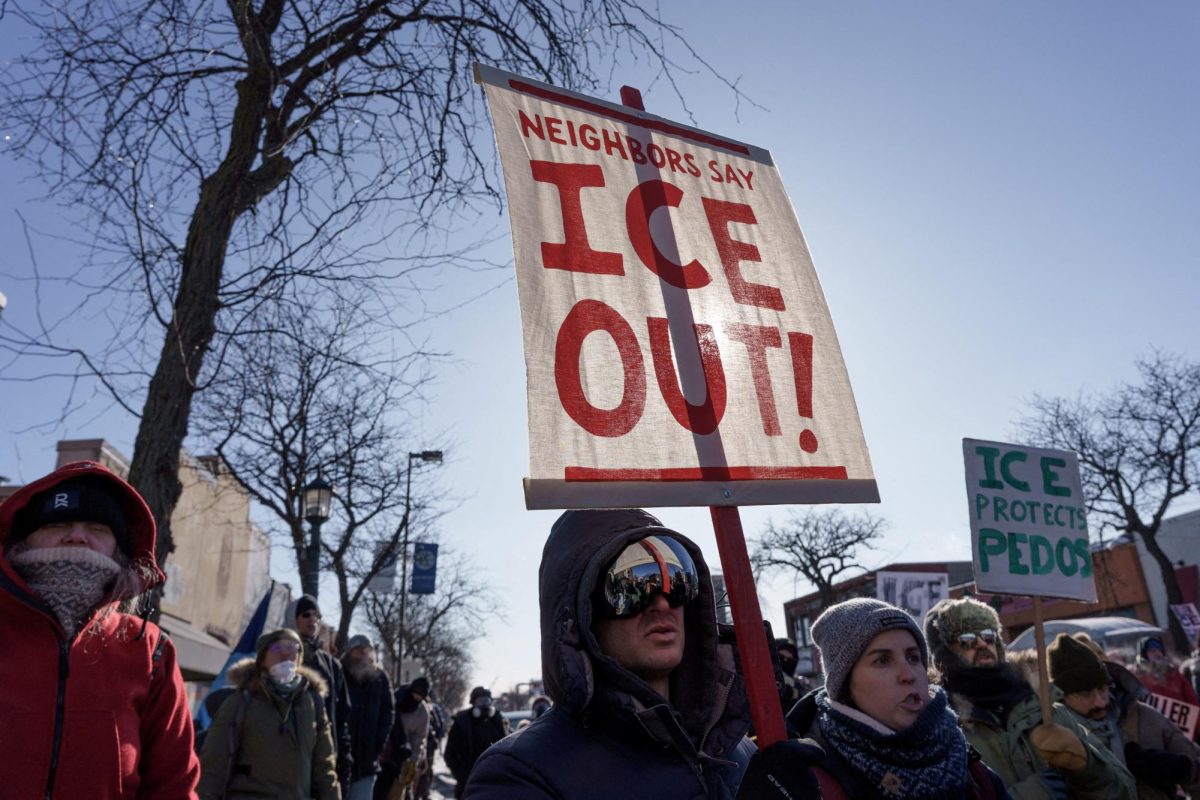
Photo from The Washington Post. (Photo credit Audrey Yu)
For many Westminster students, the shutdown’s impact is most noticeable at airports.
“We’re already seeing reports across the country of some air traffic controllers, who are already working a very stressful job, choosing to call in sick and use sick days as a form of protest, or because they’re literally tired of being overworked and not paid for their time,” said history teacher Dr. Munday.
The shortage of air traffic controllers and TSA agents has led to longer security lines, flight delays and potential cancellations.
Local organizations are working to lessen the effects of the shutdown. The Atlanta Community Food Bank (ACFB) continues to provide food for those struggling financially during the closure. The shutdown could increase demand for its services, depending on its duration. The food bank previously organized food distributions for federal workers affected by shutdowns and may do so again.
As the nation remains in a state of stasis, it is uncertain when the government will reopen.
“It is kind of an open question as to if and when the government will reopen. It’s a certainty because this is what is called a ‘must-pass’ piece of legislation,” said Munday. It eventually has to be done, but that will be dependent on when the parties can come to an agreement about the issues that are currently causing them to be in this situation.”
Until Congress passes a fiscal appropriation, government operations will remain stalled and the effects of the shutdown will persist.
Edited by Isabel Gao