

On Oct. 19, 2025 a group of thieves carried out one of the boldest museum robberies in modern history at the Louvre in Paris. Disguised as maintenance workers, the group stole several crown jewels in less than eight minutes in a theft that shocked France and the global art community.
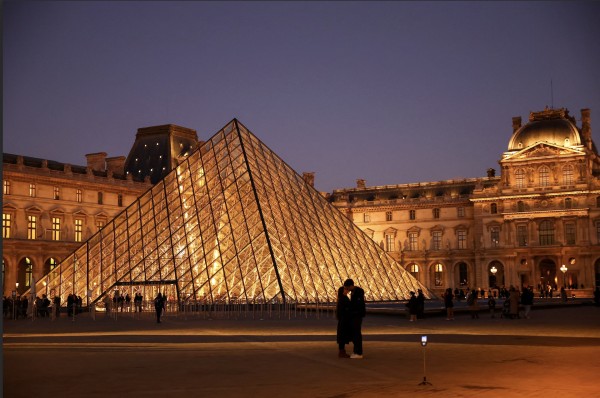
Thirty minutes after the museum opened, four masked thieves used a truck-mounted lift to reach a window that led into the Gallery of Apollo, where crown diamonds were displayed. Alarms sounded across the museum as soon as they entered, and visitors were escorted out while staff worked to clear the building. The thieves broke into the most valuable jewelry cases and took nine historic pieces, including ones belonging to Napoleon III and Empress Eugénie. The stolen jewels were valued at about €88 million. The suspects fled on scooters and disappeared through Paris before police could intervene. The entire operation lasted eight minutes.
French police launched an international investigation into the heist. One stolen crown was found on a Paris street. A preliminary report found that the security cameras facing the location of the robbery had been turned away. Investigators also discovered limited CCTV coverage, showing that the museum was underequipped for this kind of breach. Other protocols for responding to alarms were described as outdated and inadequate.
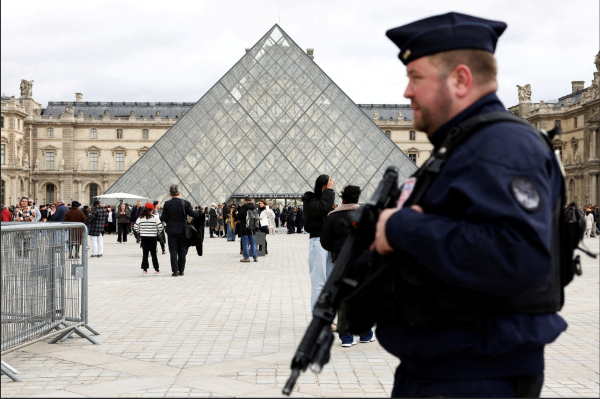
“In general, police can use DNA and fingerprints to figure out who the suspects are,” said biology teacher Audra Brown Ward. Investigators used DNA traces from the scene to identify the thieves. Four suspects were later arrested, though none of the stolen jewels were recovered.
The heist raised questions about how such valuable pieces were taken so quickly. Windows and display cases were not strong enough to withstand forced entry. Software was outdated, with some systems still running Windows 2000. A past review of the surveillance network found that passwords like “LOUVRE” were used. While it is not confirmed that the thieves exploited these weaknesses, the findings revealed significant gaps in the museum’s security. Timing also played a role, as the heist took place during a shift transition when fewer guards were on duty and response times were slower.
“It shows how they clearly underestimated the potential threat, and other art museums around the world should take note from this moment,” said sophomore Izayn Umlani. “It’s scary how loose the security is at a museum with such importance like the Louvre.”
Though the heist may unsettle students at Westminster, the school’s IT team monitors thousands of cameras on campus to maintain safety. Monthly drills, including fire and intruder procedures, are conducted regularly, and emergency communication systems are tested as well. Westminster also offers a MayATL course in the middle school, a two week program at the end of the year similar to JanTerm, where students learn about hardware and the behind the scenes technology that supports the school.
Edited by Isabel Gao