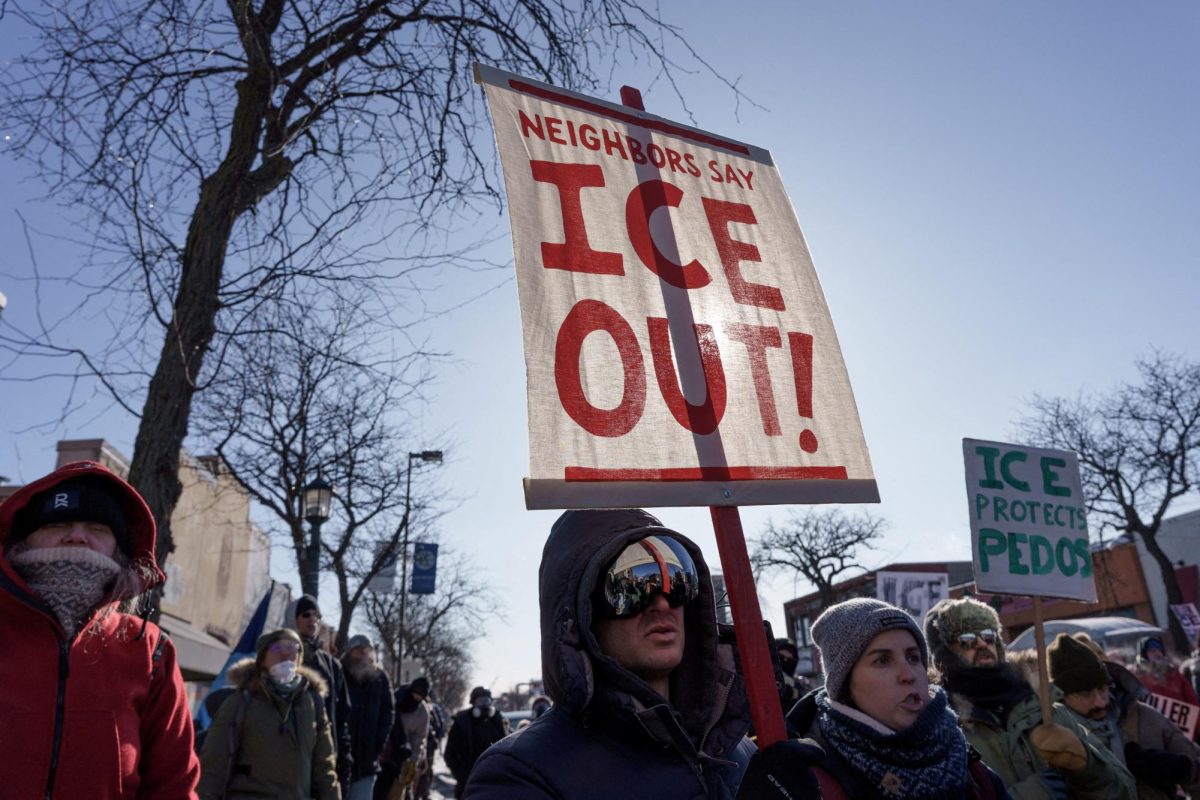
Recent ICE raids, rising crime rates and the deployment of the National Guard have contributed to a growing sense of unease across parts of the United States. Large-scale deployments initiated by President Donald Trump have prompted protests in cities including Chicago, Los Angeles and Portland, and raised questions about both the economic implications of such mobilizations and the limits of federal versus state authority.
“The National Guard has historically been deployed in cases of urban disturbances and natural disasters,” said Associate Dean of Students Brooks Batcheller. Each state maintains its own Guard, which can be federalized by the president. Traditionally used for humanitarian relief, such as disaster response, the Guard has also intervened during periods of civil unrest, from Vietnam War protests to the protection of Black students integrating desegregated schools.
Before the Trump administration, there had been only 10 federal deployments of the National Guard. Between 2025 and 2026, Trump authorized five additional deployments—to Los Angeles during immigration protests, to federal immigration facilities nationwide and later to Chicago, Washington, D.C., Portland and Memphis.
This is not without historical precedent. In 1957, President Dwight D. Eisenhower deployed the National Guard to protect the Little Rock Nine amid desegregation efforts. As in the present day, Eisenhower faced state-level resistance.
“Governors want to be in charge of the National Guard; it’s politically important to show they can handle crises,” said Batcheller. “Requesting federal help can look like weakness.”
The Trump administration’s repeated deployments have resurfaced longstanding debates over the balance of state and federal power, a tension dating back to the founding of the United States. Critics argue that using the Guard in situations without state support could centralize power in the executive branch and weaken institutional checks on power. Supporters claim such actions are necessary to address instability and rising crime.
Since the federal government funds National Guard deployments, taxpayers bear most of the mobilization cost. Many National Guard members hold employment outside of the organization, as service is typically a part-time occupation.
“When mobilized, employers temporarily lose a segment of their workforce, which can strain business operations,” said history teacher Matthew Munday. “The degree to which mobilized members of the National Guard are relocated from their communities can redirect spending patterns and reduce local economic activity; however, these changes are typically short-term and may be offset by the remittance of paychecks back to family members residing in these communities.”
Some policymakers believe deployments may also generate indirect benefits.
“With decreasing crime rates in urban areas, the downstream effects of the National Guard could promote economic growth in those cities,” said history teacher John Monahan. “It’s certainly hard to measure, but a stronger public perception of safety might encourage growth—investment and development—within the area.”
As these debates over federal authority and public safety unfold nationwide, Westminster students have begun to question how much power the federal government should hold during times of unrest.
“Although taboo to discuss politics, students have begun to openly criticize recent federal overstretch on social media,” said junior Edward Rosenblath.
As discussions surrounding federal authority and civil liberties continue, students and citizens alike remain attentive to the unfolding implications of these deployments.
Edited by Lahiri Nooka