
As Blake Hall enters the final stretch of construction, innovation takes on an even larger role within Westminster’s campus, and with it, the Innovation Fellows program prepares to expand its duties.
The Fellows program involves a year-long project on innovation and also serving shifts in the Catalyst Lab helping students and teachers.
“The whole point of Innovation Fellows to me is to take something you want to learn and something you’re passionate about, and combine them to solve some sort of problem,” said senior Mia Lu.
Speaking with her, the Innovation Fellows Final Project immediately became the focal talking point. Every spring, the Fellows host an exhibition in Barge Hall showcasing takeaways and projects from the year, and the Innovation Fellows showcase projects after a year of hard work and mastering the devices in the I-Lab (Innovation Lab).
Walking through Barge last year, tables ranged from displaying musical organs constructed from PVC pipes to showcasing gadgets that could remove Sharpie from a whiteboard, and the inspiration behind these projects is just as unique as the final products themselves.
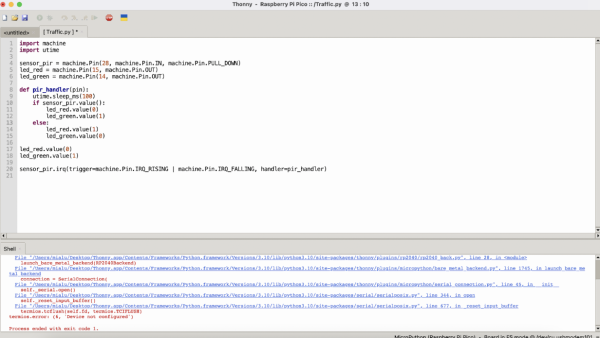
For Lu, Midtown parking drove her innovation. “I wanted to tackle a problem that I saw reoccurring throughout my entire summer. Midtown parking,” said Lu. Eager to problem solve and curious about coding, she set about creating a parking sensor. “It uses sensors and through RaspberryPi, MicroPython, and the hardware component [can] indicate parking vacancy,” said Lu. Rather than circling endlessly through a crowded parking lot, this device could guide drivers straight to any available spots.
For Westminster alum Lars Wust however, inspiration came from a video he’d watched freshman year.
“It was literally watching that 3Blue1Brown video…I watched it all the way back [in] freshman year, maybe even in middle school,” said Wust. And I remember the video made absolutely zero sense. I thought it looked cool, [and] as a senior, I think I had learned enough math then, I was like, okay, I want to go back and see if I can understand the [theorem].”
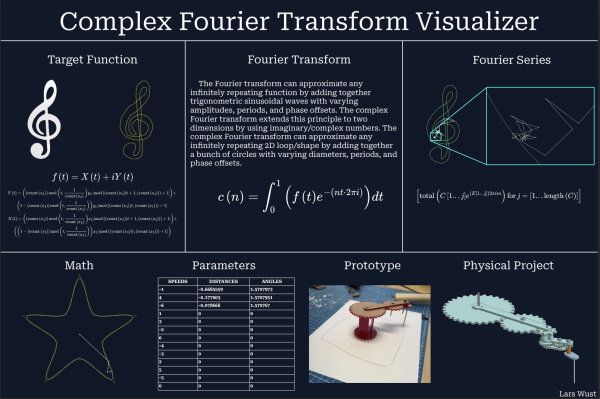
This prompted Wust to explore the Fourier Transform, a method of decomposing any complex curve into a series of simple sinusoidal motions that can be recombined to recreate the original shape. Using a mec
hanical limb fitted with a marker, he was ultimately able to reproduce the graphed shapes directly onto paper.
The final project is guaranteed to present unique issues as Fellows work through it.
As Lu worked to create the car sensor, she ran into a pro
blem: how do you use a heat-based sensor to detect a cold car?
“Initially, once a car [pulled] into a spot, the sensor would detect the heat and send the information to the LED, which would turn the LED red,” said Lu. “I initially just wanted to do it based on that, but I found issues with having the light change back to green [once] the car left.”
The heat sensor couldn’t register that the car stayed in the spot once the engine was off, as once the temperature dropped the sensor counted that as an open space. Going back to the code, Lu shifted towards looking for the heat signature of the engine upon pulling in, and then again when leaving.
For Wust, the issue arose in the mechanics of his project.
“I [wanted] to make a treble clef, but for that you needed 13 gears…the problem was, [with] each gear added, the mechanism became more and more unstable,” said Wust.
After a previous project ended in disappointment, Wust decided to simplify rather than force the mechanism. Opting instead for a four-gear device, the mechanism still had the complexity to create shapes as elaborate as stars, but was stable enough to ensure that no last-minute fiascos would occur.
Looking towards the future, Lu would like to focus on a new set of skills for this year’s project.
“It’s mostly spring assembly…it’s more physical building than my last project,” said Lu.
Shifting from coding to 3D-printing a dog treat dispenser, Lu mentioned a drive to become better experienced with the devices in the I-Lab she didn’t use quite as much last year.
Talking with both Lu and Wust, it became clear that the Innovation Fellows final project pushes students to challenge themselves and reject defeat.
“It’s still sitting at my desk at home with a few [new] modifications, but I am actually currently working on a new version of it,” said Wust.
Edited by Lucas Liu